“March” into Spring

We are rapidly heading into the spring fishery on the Outer Banks with numerous reports of blow toads and sea mullet beginning to show up on the Hatteras Island beaches. Water temperatures are gradually increasing and it won’t be long before our spring species are well settled in both the ocean and sound waters.

But are you ready? At the end of the last fishing season, there were many things to address.  Let’s look back to our new year’s resolutions and see what still needs to be done.
First item – Get more knowledge. This doesn’t mean we have to go back to school but fishing seminars do help. Learning new things is important for increased success. The best way to gain more knowledge is look back at your log book. What worked best and when? The variables were time of day, tides, weather conditions but probably more important was the water temperatures and barometer readings. One of the best sources of knowledge you can have.

Another way is stopping by your local tackle shops. They can help with any new gear or specific techniques. You may even want to check the various manufacturer’s web sites. Lots of tips can be found there. These are the professionals – they make it their business to make you a better angler.

The next one was “logging-it”. Most anglers don’t have time to jot specific notes or keep a log about the day’s fishing trip. At the end of the day, it’s all we can do to clean and organize our gear. Added time if you need to clean your catch.  Some cases, you may have to add boat maintenance.  But if you don’t document it, the information won’t be there when you need it.

The best way to increasing your success rate, is logging your trips. Not just important but basically imperative.  Other reports can be a ‘guess-estimate” or second or third hand information. Your log is real data. Can’t get any better than that.

It is extremely simple to create your own log or purchase one already designed for the type of fishing you do. If neither of these work. Email me and I will send you a copy of my log. Not sophisticated but it has worked for me for years.

Rods and reels are the most important part of your fishing system. Hopefully, these were not overlooked. These need to be checked, cleaned and stored in a location away from harm. If not, there is still time to do the maintenance.

Remember even a small defect in your rod or reel could cause you to lose your trophy catch. So check your rod and reels closely and don’t skimp here when maintenance or repair is needed.

Finally, you need to organize your gear. Remove everything from your box/bag and lay it out on the table. Place the defective or rusty items in one place and the good ones in another. I separate hooks, leaders, bottom rigs and other odd size items in plastic zip lock bags. Everything else goes in the see-thru plastic trays. If needed, replace the old plastic lure boxes with new ones. Final thing to check your pliers and other tools. If you find them rusty or defective, now is the time to replace them.

That first run of spring species is just around the corner. Take the time now. The fish are heading our way.

Until Next Time – Tightlines – Capt. Tony
NCDMF Needs Your Help

Release: Immediate

Contact: Patricia Smith

Date: Dec. 21, 2018

Phone: 252-726-7021

North Carolina Department of Marine Fisheries ask public to report cold stunned trout.


MOREHEAD CITY — The N.C. Division of Marine Fisheries wants to remind the public to report any cold stunned spotted seatrout they may see in North Carolina coastal waters.

During the winter, spotted seatrout move to deeper, warmer waters in coastal waters and the ocean. Cold stun events occur when there is a sudden drop in water temperature or during prolonged periods of cold weather, making fish so sluggish that humans can harvest them with their hands.

Many fish that are stunned die from the cold or fall prey to birds and other predators. Studies suggest that cold stun events can have a significant impact on spotted seatrout populations.

No cold stun events have been reported so far this winter, but if there are concerning weather conditions in the upcoming weeks as previously described then a cold stun event could occur in coastal creeks and bays.

Anyone seeing a trout cold stun event should report it to the N.C. Marine Patrol at 800-682-2632 or to division spotted seatrout biologist Tracey Bauer at 252-808-8159 or Tracey.Bauer@ncdenr.gov

Under the N.C. Spotted Seatrout Fishery Management Plan, if a significant cold stun event occurs, the Division of Marine Fisheries will close all spotted seatrout harvest until the summer.

A significant cold stun is determined by size and scope of the cold stun event and an evaluation of water temperatures in areas where cold stuns have been reported. Monitors that continuously log water temperature are deployed statewide in the coastal rivers and creeks prone to cold stuns.

Closing harvest allows fish that survive the cold stun event the chance to spawn in the spring before harvest re-opens. Peak spawning occurs in May.

Under N.C. Wildlife Resources Commission rules, the spotted seatrout season automatically closes in inland waters when it closes in adjacent coastal waters.

Click here to learn more about cold stun events and how they impact spotted seatrout fisheries management in North Carolina.

nr-102-2018 

N.C. Division of Marine Fisheries • 3441 Arendell Street • Morehead City, NC 28557 • 252-726-7021 or 800-682-2632

Habit-Forming Fun

Fishing on the Outer Banks is one of the easiest and the most enjoyable activities you can do when on your vacation.  Many of our visitors travel hundreds of miles to enjoy this region.  And sometimes these visitors are unaware of what brings many others to our beaches every year.

Saltwater fishing is not only fun, relaxing but can be habit-forming for the entire family.

So how can you and your family begin enjoying this great past time? I would first recommend stopping by a local tackle shop. They can give the best overall advice on getting started. What species are being caught, the proper gear and bait and any other specific information you will need. They might even be able to offer you a complete fishing package at a reasonable price. Fishing licenses can also be purchased here.

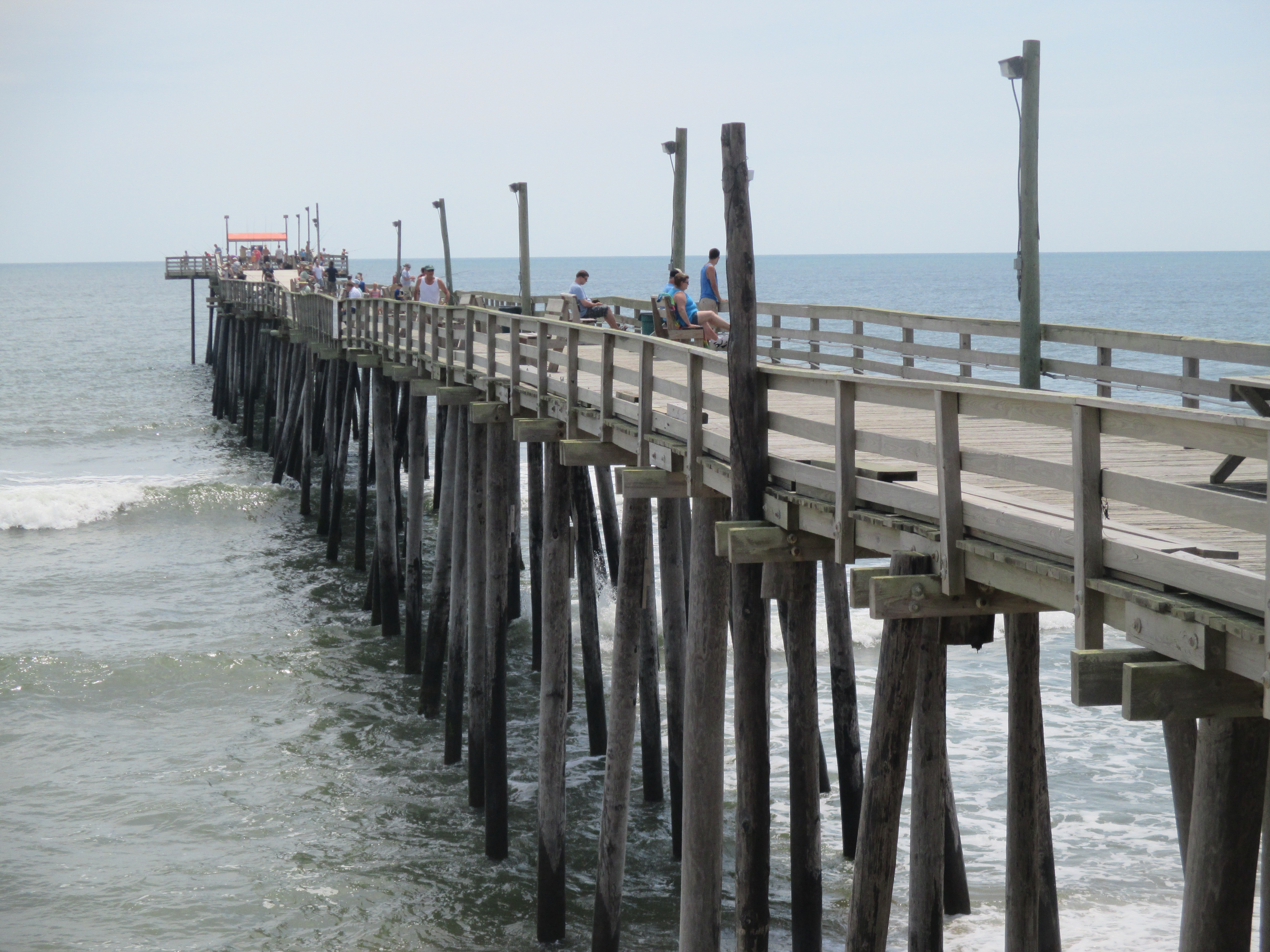
The next thing I would do is head for a local ocean pier. All of our ocean piers have a tackle and bait shop. They are staffed with knowledgeable professionals who can give you “real time” advice.

Bring your own equipment and gear but find out that it won’t work for the current conditions or species? Pier staff can rent everything you need including rod reel outfits, rigging and fresh bait..

For novice anglers, fishing on an ocean pier is usually the best way to start. They can help you select the right gear for the species being caught. North Carolina requires a fishing license and if you fish on an ocean pier, the admission price includes a one-day or multiple day license. And the best part is that other anglers on the piers are more than willing to lend a hand to both new and experienced anglers.

All of the piers on the Outer Banks are family friendly.

In addition to fishing gear, each pier provides sheltered areas, snack shop, amusements and restroom facilities and more. All piers are designed to accommodate physically challenged anglers.

So if you are looking for something new and exciting during your visit to the Outer Banks then fishing might just do the trick.

Forever be warned though – saltwater fishing can be habit forming.

Until next time – Tightlines – Capt. Tony