Reading the Surf – New Angler

The Outer Banks has well over a hundred miles of beach that hold many species of fish. The question was “How does a new angler find a good spot to fish on the surf”? Of course, the new angler can just pick any place and cast a line and hope for the best. But their success is typically hinged more by luck than anything else.

The key for success on the surf is to look for the signs. It is important to keep in mind that signs present now can change by the hour or day. So a consistent review of conditions is imperative for success.

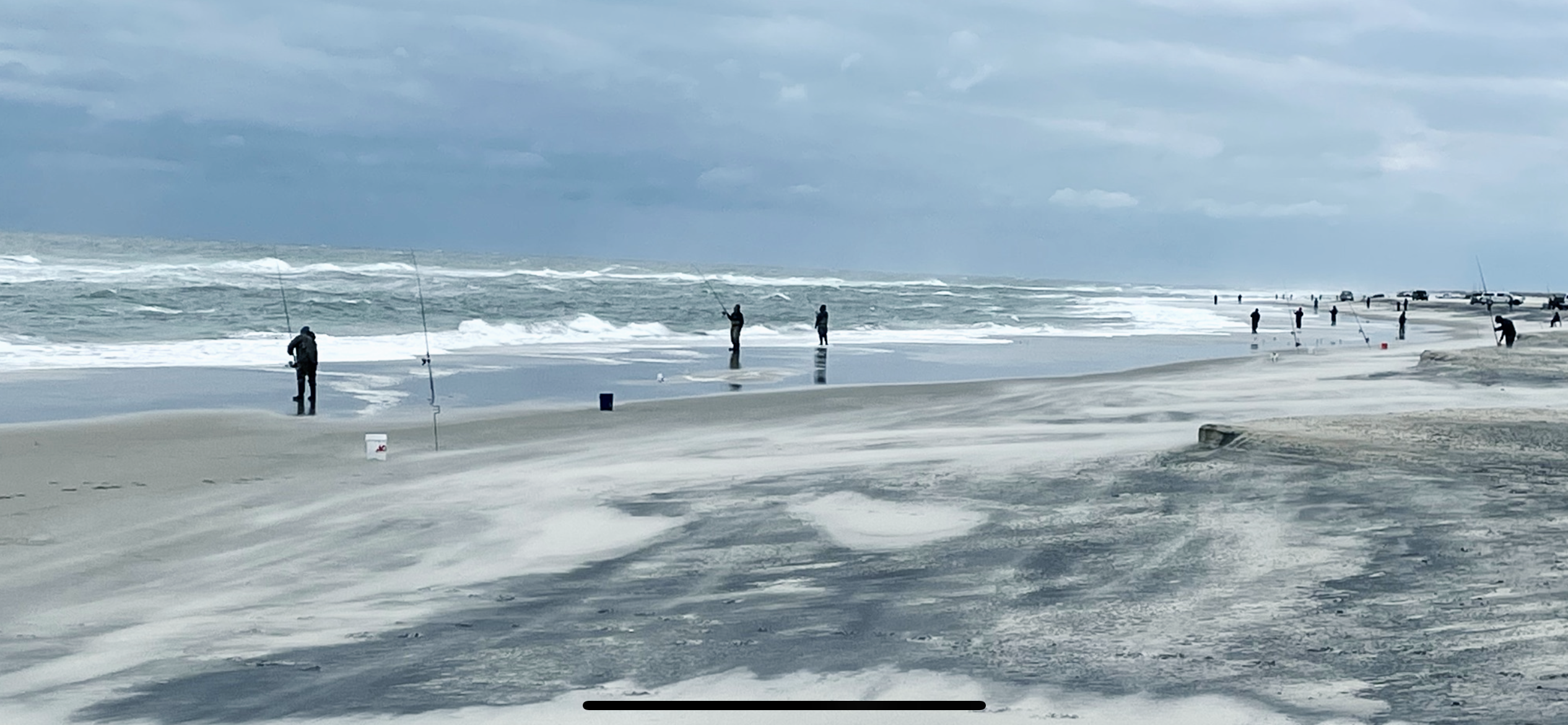
When hitting the beach for the first time, anglers should first focus on the entire picture. Look at everything but mainly focus on the surf zone. Specifically sand formations and waves are a good spot to start.

Flat sand beaches can indicate shallow water. On the beach where the sand tapers from a flat surface into the water will indicate a gradual slope. This area will be shallow for some distance.

Some sand formations that include cusps or small hills could indicate a greater slope and deeper water. The deeper water close to shore is better at holding for fish.

Wave action will also give out specific signs. Normally waves form off shore and travel a good distance in and break on the surf. This is a sign that the bottom has a gradual slope for most of the wave set.

The best condition is when the waves break off shore on a bar, taper off and then re-form and break again on the shore. This is a good indication of a slough. Sloughs form between a sand bar and a steep sloping beach. The slough is where most of the fish will be found.

A slough is a channel of moving water that flows parallel along the beach and provides a highway for fish to find food and protection from other prey. This is the best place to find fish.

The final sign is a rip current. A rip current is a rapid outflow channel or river of water. This happens when the waves push too much water onto the beach and there needs to be a way for the excess of water to flow back out to sea. They are easy to spot, Just look for the rapid out flow current.

So when looking for the best place to fish on the surf, focus on the sloughs, deeper water and rip currents. 

Remember most fish are within ten feet where you stand. So keep your eyes open, fish your bait close and never oversize your gear. 

For more local surf light tackle fishing information go to Walkingangler.com.

 Until next time – Tightlines – Capt. Tony
Surf Fishing for Beginning Angler

Surf fishing is probably the easiest type of saltwater fishing on the Outer Banks.

It can be as easy as just grabbing a rod, some fresh bait and starting catching fish. Of course there is a little more than that but really not that much more. So that’s why so many new anglers try this activity.

So let’s get started. First, anglers who plan to fish on the surf will need a saltwater fishing license. Short or long term licenses are available either online or at a local tackle shop. And while you are at the tackle shop, new anglers should pick up a copy of the rules and bag and creel limits.

The tackle shop can then advise of the best gear, baits, locations, tides and the best times of the day. Of course, most anglers fish when and where they can. New anglers should focus on fishing in the mornings and evenings when there are less swimmers. Fish tend to feed more aggressively during those hours.

Now armed with the correct gear and bait, the next thing is finding the best place on the surf. During your visit at the tackle shop, hopefully they provided a little advice on finding fish and reading the water. And as a newcomer, it can be a little confusing and occasionally frustrating because all the water appears the same. But with a steady eye, the new angler will be able to see slight changes in the waves, current and colors.

When reading the water, look for something different. A slough runs parallel with the surf. Moving water creates holes, points and rip currents. Another important key is look at the waves as they break on the shore. Look for piles of gravel, shells and small rocks. This indicates a steep drop off. Fish feed in these areas.

So here are three keys that each new angler should focus on for a successful outing.

First, fresh bait catches more fish. Use shrimp, small mole crabs or artificial fish bites. Blood worms are great but expensive, so stick with more practical baits. Remember,fresh bait spoils quickly so keep your bait out of the sun and preferably in a cooler. 

Rule of thumb is ninety percent of the fish you catch on the surf will be within fifteen yards from your feet. So cast close in. Allow your bait to move in the current. Check your bait frequently. 

And finally move. If you aren’t feeling bites within several minutes, move parallel along the beach. The surf bottom has many different configurations. Fish will seek food or protection in an area they find food and safety. Easy to find it you look closely.

Retrieving a fish should be methodical. When you feel a nibble or bite, and the fish begins to take your line, just raise your rod tip and reel slowly. Never jerk the rod. Jerking pulls the bait and hook away from the fish. Many new anglers get excited with a bite and will miss the catch when retrieve too fast.

Use the waves to help retrieve and bring the fish to the beach. The fish will be trying to escape by swimming straight away. Keeping the line tight, reel slowly when the fish isn’t taking line. Steady pressure keeps the fish hooked. 

The incoming waves will help with your retrieve and push the fish up on the surf. Be patient and use the waves to your advantage.

Once you have brought the fish ashore, remove the hook carefully, take a picture quickly and if you aren’t planning to harvest it, release it back into the water.

Well, there you go. See how easy that was. 

In a future article, we will discuss in detail where and when to fish and how to read the water. 

Until next time – Tightlines – Capt. Tony

Surf or Pier – Your Choice

Fishing the surf or ocean pier on the Outer Banks can afford the opportunity for the vacationing family to catch fish and enjoy the beautiful Outer Banks together. 

Family vacation schedules are typically pre-planned months before they unpack their car after arriving at their cottage. And typically any modification to the tight schedule can throw off the week’s plans.

But finding time to cast a line either in the ocean or off a local pier can easily fit in any busy vacationer’s schedule.

 But now the biggest question, how do we choose between fishing the surf or on an ocean or sound side pier? The answer depends on what the angler is looking for.

 First, surf fishing can get the new angler up and catching fish quickly and is great for the whole family.  

Just walk out on any beach, cast a line and wait for that bite. But there are also some important rules that need to be considered when fishing on the surf. The angler needs to start by purchasing a fishing license and having a good understanding of the various regulations that apply to this type of fishing. A local tackle shop can help with both of these items.

The next item is fishing gear. A simple rod and reel setup and fresh bait are basically the only things you need to get started. Of course, there are many items you can add to that list that will help you make your day successful, and really the sky’s the limit.

Many surf anglers, regardless of their experience, enjoy the solitude and nature at its finest. Then add a nice catch for dinner, completing their day.

 Fishing on an ocean pier is another great way to catch fish. Piers are safe and a fun place for the entire family.

 A fishing pier gives the angler the opportunity to fish both close to shore and then hundreds of feet out along the pier into the ocean. The various depths of water combined with pilings add structure and safety for a variety of fish that make this location home.

 All of our ocean piers carry a blanket fishing license which means you do not have to purchase a license to fish there.

 Fishing piers have many advantages over surf fishing. On site tackle shops and professional staff can provide advice and specific techniques. Rod and reel sets with proper rigging can be rented. They have a variety of baits and can advise the angler on what’s biting and which bait to use. And all piers have a place where you can pick up a quick drink or snack.

 On the piers, you will also find other anglers willing to provide advice, answer questions or lend a hand retrieving or releasing your catch.

 The choice on which type of fishing to do is really up to the angler. Either type of fishing can make any family’s vacation week complete.

 So regardless of whether you choose to wet a line on the surf or drop a line off one of our local ocean piers, the memories you make will last a lifetime.

 Until next time – Tightlines,

 Capt. Tony