Seasonal Change – Getting Cold

Well, we have finally arrived at that time of year. Another fishing season is rapidly transforming itself into a time of pause. Cold temperatures and the occasional weather system forces our local species into their annual migration. During this phase many of the ocean piers have closed for the season and others modify their hours to accommodate the lack of anglers and fish to catch.
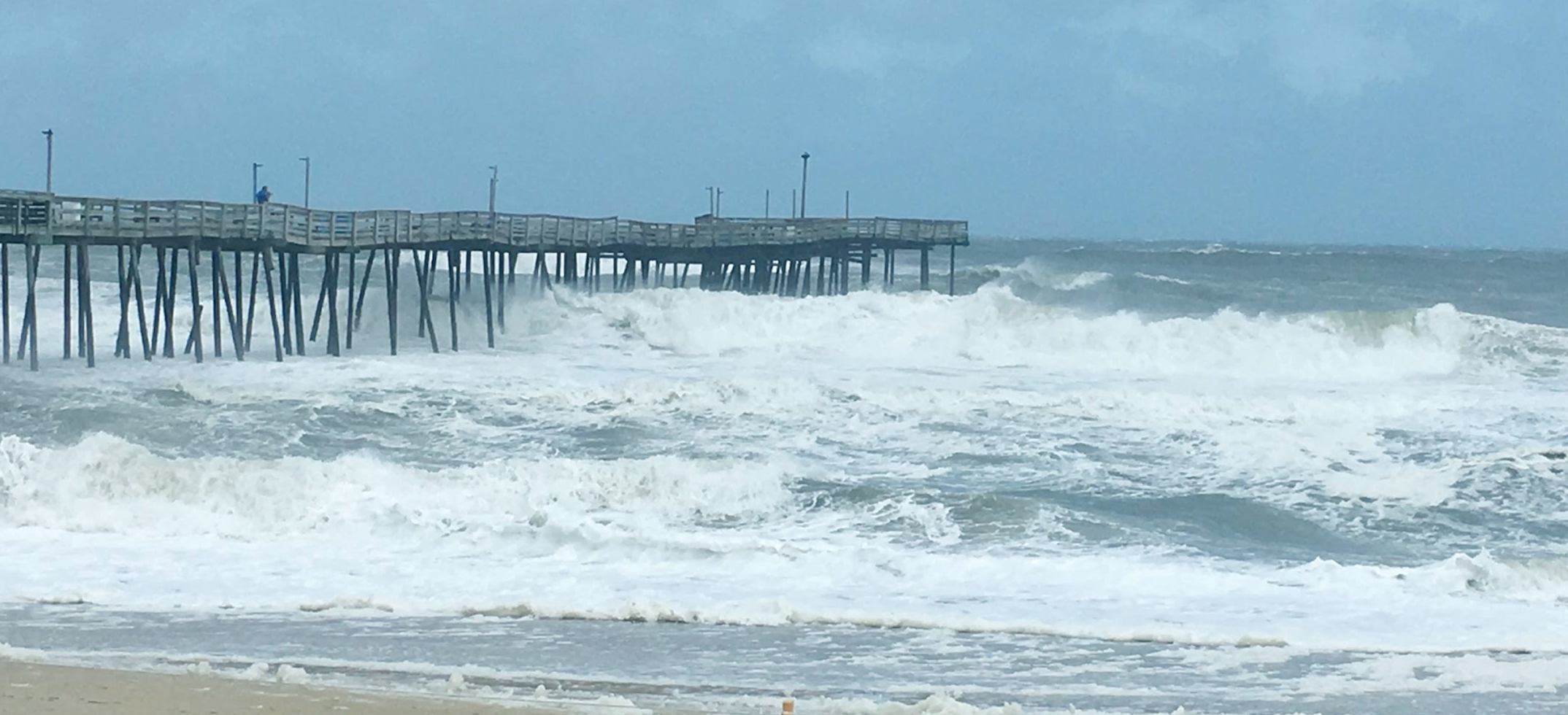
Well, we have finally arrived at that time of year. Another fishing season is rapidly transforming itself into a time of pause. Cold temperatures and the occasional weather system forces our local species into their annual migration. During this phase many of the ocean piers have closed for the season and others modify their hours to accommodate the lack of anglers and fish to catch.

Scarcity sets the stage for anglers to reboot their strategies and plan for the upcoming season. But all is not lost of the lowering temperatures and approaching and unsettled weather patterns.

There are still three ocean access piers open throughout the off season. Both Jennette’s Fishing Pier in Nags Head and Avalon Pier in Kill Devil Hills will remain open with limited hours. The newest pier, Bonner Bridge Pier at the southern end of the new Basnight Bridge will stay available 24 hours a day.

In addition the three ocean side piers, the Wildlife pier (at Pirates Cove) and Bebop pier (west end of the Umstead Bridge) will be fishable throughout the off season.

The Daniels Bridge catwalk and the Estuarine Access Dock on the Nags Head Causeway are always two great places to fish year around. But in winter, the concrete barrier on the bridge provides a break from the north winds.

The hundreds of miles of surf and sound side access from Corolla to Ocracoke are open to anglers with some restrictions. Check with localities for proper access rules and availability.

There are many days that fishing is very productive when optimal conditions exist but other days will test the angler’s endurance and patience. Anglers should plan accordingly.

And as always, anglers should notify someone where they will be fishing. Due diligence is just good policy. Inclement and winter fishing is different from the warmer weather. Mishaps in summer are easily addressed. But not so much in winter.

The good news is that the Outer Banks surf, three piers, sound side bridges and many of the freshwater ponds and ditches should hold fish throughout the entire winter. Special gear will be needed but those dedicated enough to brave the elements can be rewarded.

Remember to obtain a fishing license where needed and follow creel and bag limits. Release all fish carefully that are not harvested.

As we charge into the off seasons, there is much to learn from last year and much to do in preparation for the coming season.

Until next time – Tightlines – Capt. Tony


Tides Do Matter

We have talked tides several times over the years and this is a great time to refresh. Tides can have a major influence on whether you catch fish or not. It’s the various tides that help create ideal conditions for fish to feed. And if the angler is present during these feeding times, their chances improve significantly.

It’s been a common practice that most anglers prefer to fish on top of the high or low tides. Frequently, anglers will also look to fish on the sun and moon phases  but it’s actually the tides that should bring the anglers out. But it’s the specific part of these tides that make all the difference.

Let’s take a closer look at why you too should consider following the tides.

Ocean tides occur up to four times per twenty-four hour period – two high and two low. The tide phases are influenced by a number of conditions but mostly the moon.  Frequently, we hear that it’s best to fish on the exact full or new moon or on the top of the high or low tide because in theory that’s when the bite is on.

Well, this is only partially correct. Let’s take a closer look at how the tides affect the bite.

First, a little background – when the high and low tide are at their peaks, the water is slack and not moving unless there is outside influence such as wind. And second, when the tide is between the high and low, this is where a significant water movement can occur between the two tide phases.

Now, let’s break down one side of a tide. At the highest phase of high tide the water is slack. As the tide begins to fall, water starts to move toward the low tide phase. As the level continues to fall, this tide or water begins to pick up speed until it reaches a certain point usually two thirds into this phase at which the water begins to slow again to a slack phase.  Then the process starts again but in reverse.

So let’s do an example to help find the best time to fish. Let’s start with high tide at 600am and the low tide at 1200 noon. The tide is slack at 600 and with gravitational influence the water level or tide begins to fall. As the tide continues to fall, it will pick up speed typically around 0730 and continue to increase flow or speed until 1030. At this point the tide begins to lose its force and between 1030 and 1200 noon the tide slows and finally is slack again.

As you can see in this example, the fastest moving water and the best times to fish is approximately 1-1/2 hours after high and before low tide. Other times work too, but for increased success pick these.

Remember, there are many other conditions that can influence the bite. Water movement is just one. Monitoring water temperature, seasonal migration and barometer can also improve your success.

But reviewing tide phase should always be part of your fishing trip preparation.

So the next time you pick up a local tide chart – do some homework and you might just catch some more fish.

Until next time – Tightlines – Capt. Tony  

Time of Day Matters

The time of the day to fish does matter. Just look around at all the most popular fishing locations. They are crowded early in the morning and occasionally just before dark or even at night. There must be something to these specific times that brings these anglers out. And there is.

Traditionally, it has been the experience among anglers that it’s better to fish before breakfast or after dinner. Whether this is just a habit or the only time they can get on the water, is anybody’s guess. But there are many reasons why anglers would prefer these times opposed to others.

Comfort is one. Cooler weather conditions and enjoying the outdoor experience could be part of the equation. Or it might just be that the fish actually bite better during those times. Who knows the actual reason but there are several theories that could tell the story. So let’s explore several.

There is definitely a big difference between fishing dawn and dusk versus day time. Conditions like daily sunrises, sunsets, various moon phases;  and just plain cooler air and water temperatures along with the amount of light striking the water all can contribute to a change in feeding habits and increase the bite.

The sun has always had an effect on fishing. On bright days with the sun directly overhead seems to chase the fish deep in the water and slows their metabolism. On the other hand, low light and cloudy days seem to turn the bite on.

At dawn and dusk, the sun rays can be at a sharper angle to the water. This angle allows for lower light to penetrate the water and enhances the sight of various marine species. The lower light conditions can give feeding species an advantage finding food or the bait quickly because of their light sensitive eyes.

The moon phases can also affect the movement and height of the tides but more importantly this water movement can confuse many bait fish.  And this water movement can also bring in a change in more comfortable water temperatures.

Another theory is that there is a different amount of oxygen content in the water. Cooler water contains more oxygen than warmer water. So it’s natural that fish find comfort in these cooler conditions and tend to feed more.

At dusk, the air temperature will usually drop. The cooler air causes the water temperatures to also decrease slightly. This cooling trend creates a desirable environment for most species. Small living organisms and bait fish are extremely active during these times and make for easy prey of the larger fish. So with more activity brings an increase in the possible success rate.

At dawn, the air temperatures begin to increase with the sun rise. The water temperatures will also increase. Even though it might be slight, the fish seem to sense this change and typically will begin to feed aggressively during this period being aware that their feeding cycle may end soon.  As the temperature continues to rise into the morning and dawn turns into day, this change causes the fish and their prey to slow down considerably and seek deeper cooler waters again.

Obviously, these are only a couple of my theories on why fish feed more aggressively during these times. There could be many other conditions and reasons why fish are more active at dawn and dusk.  

Regardless of the reasons, anglers will continue to look forward to that “before breakfast and after dinner bite”.

So now the next question based on the facts, “will you try your luck at dusk or dawn too”?

Until Next Time – Tightlines – Capt. Tony