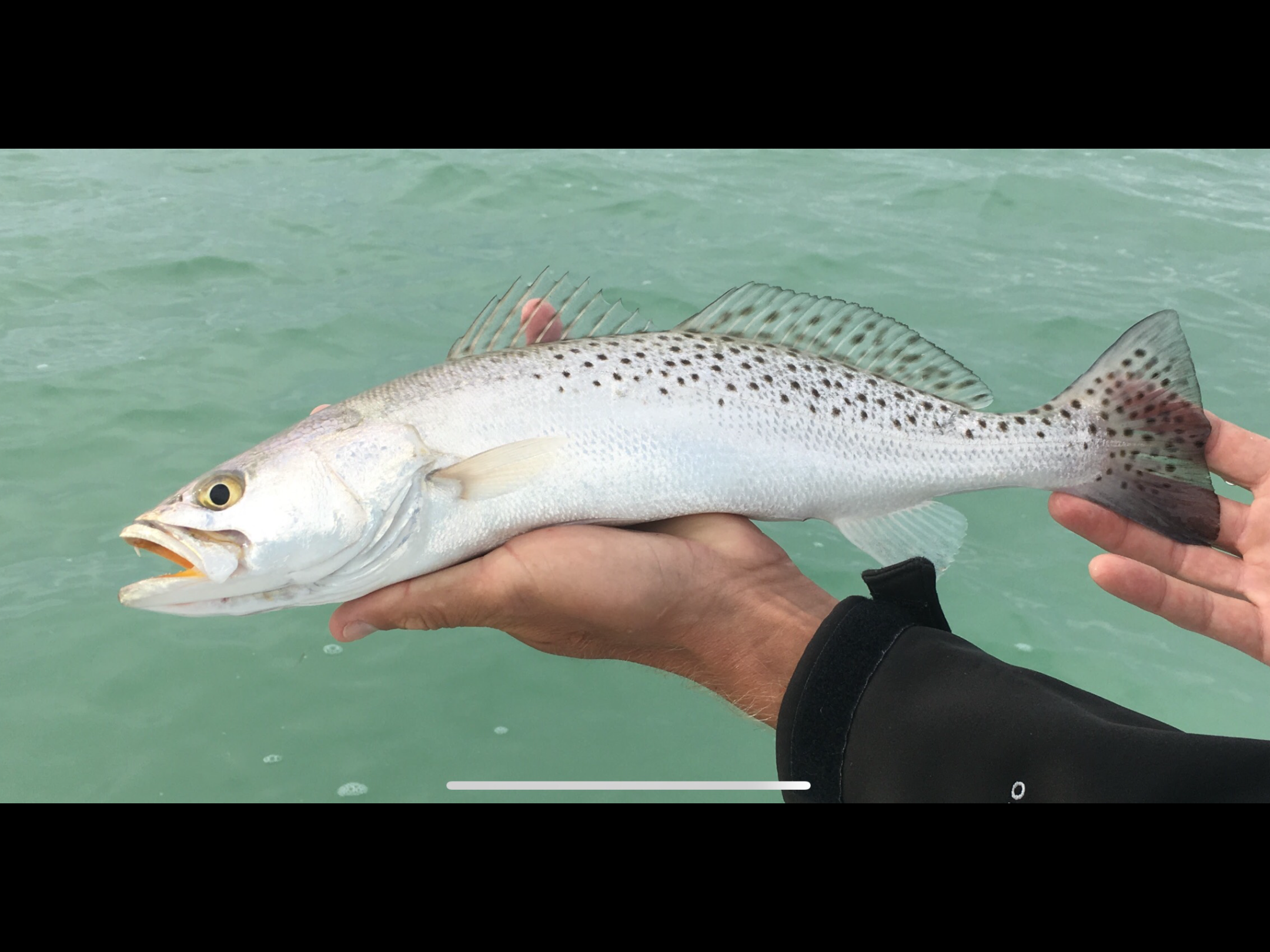
Speckled sea trout is one of most sought after gamefish on the Outer Banks. Their aggressive strike, beautiful appearance and great table fare make them a desirable target. Speckled trout are members of the drum family which are noted for their drumming or croaking sounds.
They are also aggressive hunters and will feed constantly except while spawning. These fish can grow quickly to over sixteen inches in just two years. It is not unusual for anglers to catch dozens of these fish well into the mid to upper twenty inch range considered “gator trout”.
The prime season for these speckled trout is spring and fall but they can be found locally almost twelve months a year. They are temperature sensitive and their residency is dependent on their comfort zone. They are known as a migratory species but can remain in one area for months or even the entire season only moving to feed or spawn. Their main diet is small bait fish but have been known to attack shrimp and similar natural baits.
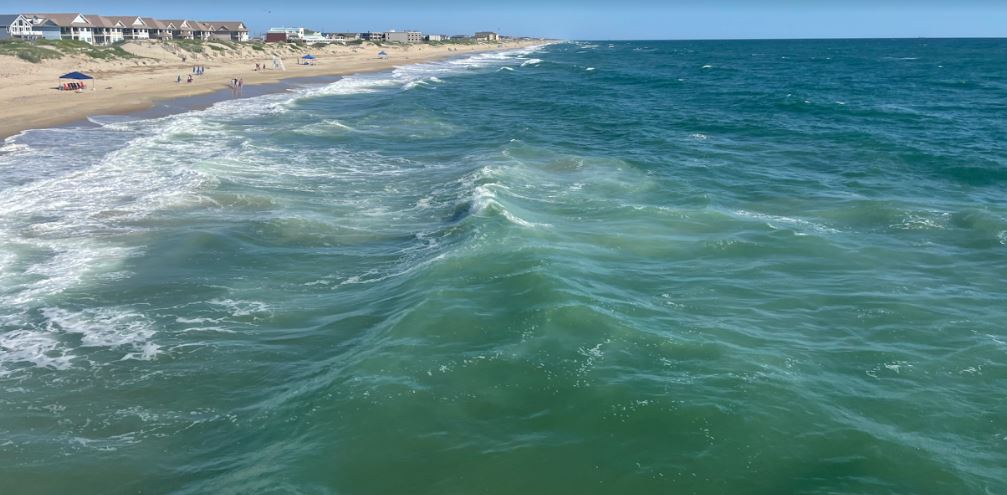
Speckled trout are creatures of habit and in season can be caught in the deep ocean sloughs just inside the bar along the entire surf zone and adjacent to our ocean fishing piers. Fishing from the surf or one of our many piers or soundside bridges can give the angler an advantage recognizing perfect spots to target speckled trout.
Other popular shore locations that anglers can find these fish on the Outer Bank are the inshore grass flats, potholes and creek mouths that feed the various sound waters. These areas provide a safe zone where there is good water quality, moderate water temperatures, solid water movement, some structure for safety, and provide many ambush spots.
Wade fishing in the sound is another popular way to target these fish. This type of fishing has several significant advantages. When the angler is in the water, they will eliminate any possible shadows due to proximity to the sun and water surface. Slowly shuffling their feet along the bottom helps make the angler more stealth. And being directly in the water allows the angler the ability to feel any water temperature change and the force and direction of the current.
Anglers should use six and one half to seven and one half (can use 6-½” to 7-½”) light medium rod and reel setup. Ten pound braid or fifteen pound monofilament line followed by a twenty pound two foot fluorocarbon leader will give the best results. This setup gives the strength for the hook set, quick retrieval and helps make baits appear natural.
There are many types of rigging used to catch speckled trout. Most popular are lead head jigs with a plastic swim tail, top water hard baits and popping corks. Trout have also been known to take spoons, a bucktail or even Mirro Lures.
But the most successful techniques anglers use to catch speckled trout are jigging, using top water baits and popping corks.
The jigging involves the use of a lead head jig with a three or four inch plastic swim tail. The jig is then cast and retrieved using several quick jerks of the rod followed by a pause, allowing the bait to pause or fall. This casting and retrieval is repeated until there is a strike. The strike or hookup usually occurs during the pause or fall phase.
The next technique is using a top water floating or sinking hard bait. The lure is cast out and retrieved. The design of the lure produces a unique darting or swimming action. The quick and erratic nature of the top water lure during the retrieve causes splashing and noise which attracts a trouts attention. When the strike occurs, it can be violent and fierce as the fish crushes the lure on the surface.
The final method is using a popping cork and is probably the most successful technique for both novice and experienced anglers. The rig is a cork float with a natural bait or plastic tail suspended below it on a hook or jig head. The angler casts it out and will give several quick jerks on the rod causing the cork to jump and make a splashing noise. This splashing mimics another feeding fish. Other nearby fish will then come to investigate the noise and find an easy meal sinking just below the surface.
Finding these fish requires a simple level of understanding to determine their habits. The best way to locate these fish is to monitor your environment and watch for any unusual conditions. Especially look for signs of life. Finding the birds, bait fish or crustaceans or presence of other marine species in the area can reveal the presence of speckled trout. The movement of tides can flush shrimp, crabs and other small bait fish into the feeding zones. But regardless of other conditions or phase of the tides, moving water is the key.
The best way to catch speckled trout throughout the year is to be flexible and the ability to change to meet the conditions. Don’t be afraid to modify your technique or try something old or new.
Until next time – Tightlines – Capt Tony