Surf Fishing is Fun

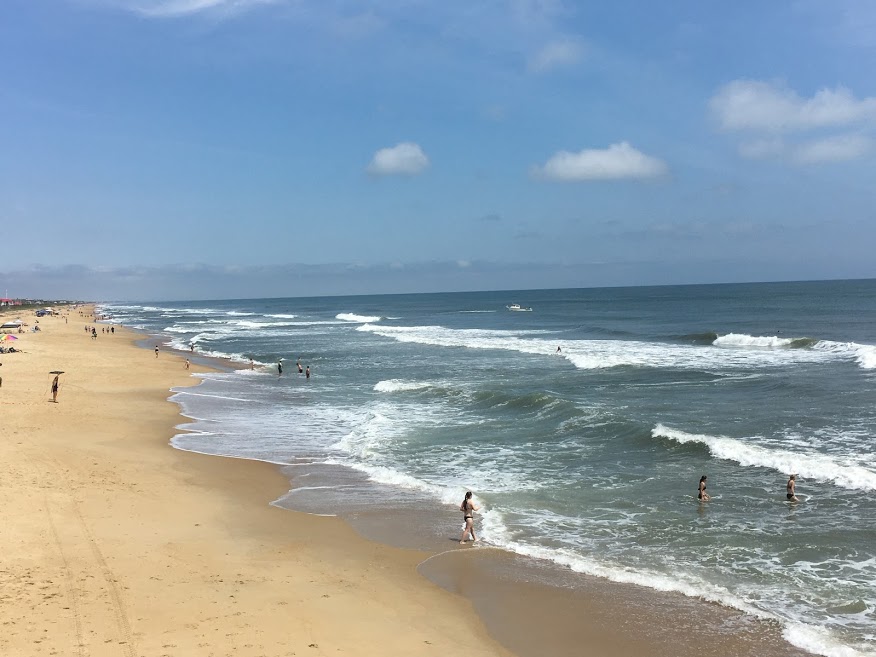
Summer is here and what better way to enjoy the Outer Banks by trying surf fishing.

Fishing on the surf is one of the most relaxing and least expensive activities you can do at the beach and it can be fun for the entire family. All you need is a simple saltwater rod, reel and several items to enjoy this hobby.

The first thing you want to do is research the regulations. Make sure you know the limits of any species you catch. Also, you may need a license to fish on our beaches. Licenses and rules can be obtained at any local tackle shop. Tackle shops are the new (and experienced) angler’s best friend.

Next is selecting the spot on the beach. I always check with other local anglers or tackle shops for this information. They can usually point you in the right direction. But basically, any spot on our beach will hold fish.
Like any sport, you will need specific gear. These items will include a good medium seven rod and reel set up, a bottom rig, package of hooks, several different size sinkers and bait. If you don’t have your own rod and reel set up, a complete package can be purchased any tackle supply shop.

The standard rod and reel from a tackle shop will already be rigged with line. You will attach the bottom rig to the line. You can either tie the rig directly to the line or tie a snap swivel to the line first and then hook the rig to this connector. A snap swivel allows for a quick change over if you need to replace the bottom rig.

Next you want to install the hooks. Number four or six size hooks work fine. I slide the loop end of the hook line over the bottom rig loop and slip the hook through the bottom rig loop. This creates a strong connection. A sinker is attached to the bottom of the rig. I carry different size sinkers and attach the lightest one that will allow me to hold the bottom.

Bait is the most important component. I use fresh shrimp or fish bites. Do not peel the shrimp; just place a small piece on each hook. Sometimes, I insert a small quarter inch piece of a fish bite over the hook after the shrimp. This keeps the shrimp on the hook and prevents smaller fish from stealing the bait before a larger fish eats it. Remember – the fresher the bait – the better the chance for success.

Most bottom fish can be found within fifteen feet of our shore line. So cast just over the waves. Let the bait sit on the bottom and wait for the bite. The bite feels like a tap tap tap. When you feel the bite, just raise your rod tip and reel in. If your line moves on the bottom, change to the next size up sinker.

It’s that simple.

So the next time you have a little free time and want to learn a new hobby – take up fishing on our coast. It’s a great place to enjoy the outdoors and our beautiful beaches.

One final tip – release all fish carefully that you are not going to keep the fish so it can be caught again

Until next time – Tightlines – Capt. Tony
Tides Make a Difference

Tides have a major influence on whether you catch fish or not. It’s the tides that help create ideal conditions for fish to feed. And if the angler is present during these times, their chances improve.

As a rule, most anglers prefer to fish on the high or low tides. And frequently, anglers will also monitor sun and moon phases but it’s the tides that brings them out. But it’s the specific part of these tides that make all the difference.

Let’s take a closer look at why you too should consider following the tides.

Ocean tides occur up to four times per twenty-four hour period – two high and two low. The tide phases are influenced by a number of conditions but mostly the moon.  Frequently, we hear that it’s best to fish on the exact full or new moon or on the top of the high or low tide because in theory that’s when the bite is on.

Well, this is only partially correct. Let’s take a closer look at how the tides affect the bite.

First, a little background – when the high and low tide are at their peaks, the water is slack and not moving unless there is outside influence such as wind. And second, when the tide is between the high and low, this is where a significant water movement can occur between the two tide phases.

Now, let’s break down one side of a tide. At the highest phase of high tide the water is slack. As the tide begins to fall, water starts to move toward the low tide phase. As the level continues to fall, this tide or water begins to pick up speed until it reaches a certain point usually two thirds into this phase at which the water begins to slow again to a slack phase.  Then the process starts again but in reverse.

So let’s do an example to help find the best time to fish. Let’s start with high tide at 600am and the low tide at 1200 noon. The tide is slack at 600 and with gravitational influence the water level or tide begins to fall. As the tide continues to fall, it will pick up speed typically around 0730 and continue to increase flow or speed until 1030. At this point the tide begins to lose its force and between 1030 and 1200 noon the tide slows and finally is slack again.

As you can see in this example, the fastest moving water and the best times to fish is approximately 1-1/2 hours after high and before low tide. Other times work too, but for increased success pick these. These three hours are the key!!

Remember, there are many other conditions that can influence the bite. Water movement is just one. Monitoring water temperature, seasonal migration and barometer can also improve your success.

But reviewing tide phase should always be part of your fishing trip preparation.

So the next time you pick up a local tide chart – do some homework and you might just catch some more fish.

Until next time – Tightlines – Capt. Tony  

OBX Fishcast

New Episodes of OBX Fishcast are posted each Friday at noon.


Created By Jody O’Donnell

“OBX Fishcast” is an in depth look at the week of fishing on the Outer Banks of North Carolina and a peak at what to expect in the near future. 

Easy access to this podcast can be found in the Walkingangler links section.

Until Next Time – Tightlines – Capt. Tony