The “Little Bridge”

The Melvin R. Daniels Bridge is one of the favorite places to fish on the Outer Banks. Better known as the “little bridge”, it was once one of the local’s best kept secret. But with its central location, easy access, amenities and abundance of action most of the year, this bridge is now known as one of the best places to catch fish.

The Daniels Bridge is located in the town of Nags Head on Rt. 64/264 Manteo Causeway just west of Whalebone Junction. The concrete structure has easily accessible guarded walkways on both sides of the bridge. A five foot concrete barrier on the south side provide protection from wind and traffic.
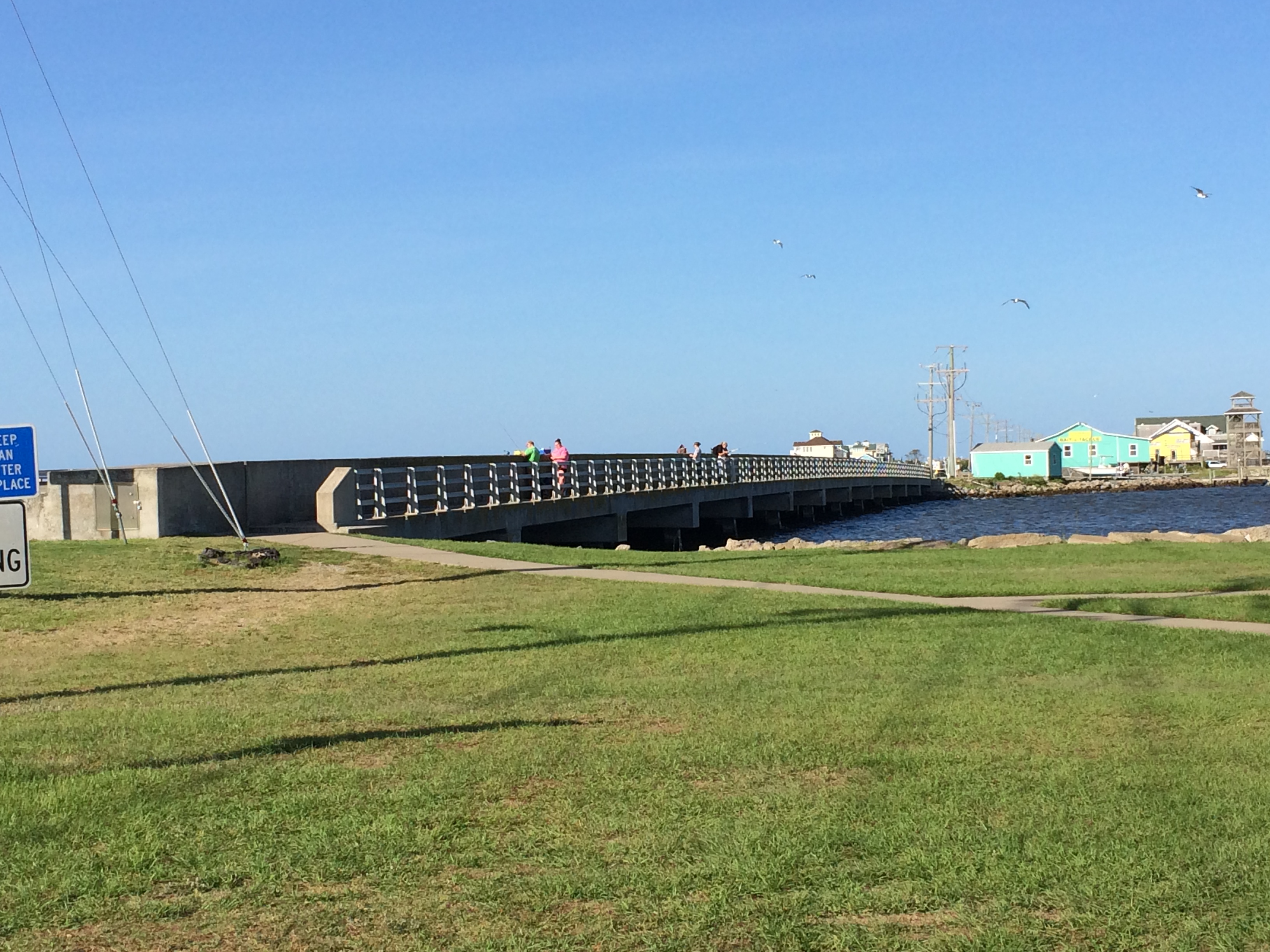
The parking lot on the west side of the bridge can accommodate dozens of vehicles.  And adjacent to the parking area, visitors will find a nice picnic area, covered pavilion and modern restroom facilities. There is also fish cleaning table and running water as an added convenience.

When fishing this bridge, most anglers will start on the south side and work their way along the walkway from west to east. After working the south side anglers will typically flip to the northern side of the bridge.

Many species of fish can be found around this bridge. The key is watching the bait fish and other anglers. Try to mirror their actions. The sound bottom is mostly sandy with minimal structures outside the bridge footprint.   Unless jigging, it is a safe bet to fish close in toward the bridge pilings. Fast moving current under this bridge is the angler’s best friend.

Most anglers use a light to medium fishing gear to either bottom fish or jig for roving schools speckled trout or stripers. The standard two hook bottom rig tipped with small #4 hooks with fresh shrimp or cut bait is best for bottom fishing. When jigging, anglers typically use small lead head jigs fitted with a swim bait or other artificial plastics.

The best advantage for anglers who fish on the bridge is they don’t need any special equipment. It is important to just keep it simple. A simple light rod and reel, a two bottom rig and some fresh bait should help to get the action started quickly.

Anglers who want to fish on the Daniel’s bridge need to purchase a saltwater fishing license and obtain a copy of the local fishing regulations. It is also imperative that all anglers know the creel and bag limits for each species.

The saltwater license, a copy of the regulations, fresh bait along with any fishing gear can be picked up at any local tackle shop.

So for a great place for the beginning angler, kids of all ages, families or the experienced angler looking for that trophy fish, the Melvin R Daniels “Little Bridge” is the place to go.

Until next time – Tightlines – Capt. Tony

Organize Your Bags

Tackle bags can sometimes be compared with our backyard sheds. We buy a great tool, maybe use it once or twice, and then need a place to store it before the next use. And that next use may not be anytime soon.  So we place it in the shed and then the next thing we know, the shed is full and when we need that tool, you can’t find it.

Well, our tackle bags are a lot like those backyard sheds. We need a place to store our go-to items along with that special gear we purchased with the hope that it would work. And like storing dozens of tools in the shed, the fishing gear somehow gets shoved in our tackle bags and frequently gets lost or damaged.

Not only can gear get damaged but the angler can get injured reaching into their bag for something only to get stuck by a hook or bait knife.

Organization of fishing tackle and gear is imperative. Most anglers use plastic trays or zip lock bags to store items in their bag. Hooks, sinkers, floats and other items should be kept in their original containers if possible. Bags and boxes have many compartments which can be used for frequently use tools, extra line, scents.

So when the fish are biting or the blitz is on is no time to begin digging into you gear box or bag to retrieve something. It’s best to put things in their place where you can access them quickly before the big rush occurs.

Remember, your target species won’t wait around for you to rig up the right gear and catch them.  You must be ready at any moment.

“Because most times you only have a moment to make that cast”.

Until next time – Tightlines – Capt. Tony

Know the Rules

Fishing in Florida during the colder months can be an extremely rewarding experience if you know the rules. Now we are not talking about the rules and regulations on creel and bags limits. Although knowledge of these regulations are mandatory in every region, it’s the small subtitles that can make a difference of success for the visiting angler.

We hear all the time that fishing is the same regardless where you fish. But in Florida that can’t be further from the truth. The various species are stealth and they spook very easily. And catching them can test even the most passionate angler.

There several interesting techniques that can increase the potential for success.

Know your target. Some of the most important items to be aware of when fishing in Florida is to know your targets specific tendencies. Temperature preference, tide phases, feeding habits, and movements and means of comfort and hideaways are important tips that help the angler. Being familiar with these can help improve your success potential

Match the hatch is probably the second most important tip to remember. Many species are creatures of habit and they will feed on the most plentiful and easiest bait available. So the best way to increase the success rate is use a lure or bait that is similar to what’s in the water. Color is also important but it’s the contrast and presentation technique that can have more influence. The key: mimic the food source and try to “BE THE BAIT”.

Downsize your gear. The lighter the gear the easier it is to place the bait in the proper location, present it naturally and then feel the bite. Minimize any foreign objects from the environment. Anything outside the lure should appear natural. So use the lightest leader materials, limit you connections to only small knots and avoid any type of metal on your tackle or baits.

Technique and Presentation. Regardless of your lure or bait selection, it’s the natural presentation that can make all the difference. The retrieval technique can make the difference between a strike and spooking your target. Remember, most strikes occur during a pause in any retrieve when the prey is most vulnerable.

Change it up. Some anglers will switch their salt to fresh water gear to encourage the strike. Modifying baits such as adding a rattle or cutting a slice from a plastic swim bait that mimics a wounded fish may spark the interest of a feeding fish. As a general rule, “change is always good”.

Although there are dozens of other techniques, I have found these to help increase my catch rate.

Never be satisfied with the basic package, experiment and challenge yourself and you will not be disappointed.

Until Next time – Tightlines – Capt. Tony