NCDMF Needs Your Help

Release: Immediate

Contact: Patricia Smith

Date: Dec. 21, 2018

Phone: 252-726-7021

North Carolina Department of Marine Fisheries ask public to report cold stunned trout.


MOREHEAD CITY — The N.C. Division of Marine Fisheries wants to remind the public to report any cold stunned spotted seatrout they may see in North Carolina coastal waters.

During the winter, spotted seatrout move to deeper, warmer waters in coastal waters and the ocean. Cold stun events occur when there is a sudden drop in water temperature or during prolonged periods of cold weather, making fish so sluggish that humans can harvest them with their hands.

Many fish that are stunned die from the cold or fall prey to birds and other predators. Studies suggest that cold stun events can have a significant impact on spotted seatrout populations.

No cold stun events have been reported so far this winter, but if there are concerning weather conditions in the upcoming weeks as previously described then a cold stun event could occur in coastal creeks and bays.

Anyone seeing a trout cold stun event should report it to the N.C. Marine Patrol at 800-682-2632 or to division spotted seatrout biologist Tracey Bauer at 252-808-8159 or Tracey.Bauer@ncdenr.gov

Under the N.C. Spotted Seatrout Fishery Management Plan, if a significant cold stun event occurs, the Division of Marine Fisheries will close all spotted seatrout harvest until the summer.

A significant cold stun is determined by size and scope of the cold stun event and an evaluation of water temperatures in areas where cold stuns have been reported. Monitors that continuously log water temperature are deployed statewide in the coastal rivers and creeks prone to cold stuns.

Closing harvest allows fish that survive the cold stun event the chance to spawn in the spring before harvest re-opens. Peak spawning occurs in May.

Under N.C. Wildlife Resources Commission rules, the spotted seatrout season automatically closes in inland waters when it closes in adjacent coastal waters.

Click here to learn more about cold stun events and how they impact spotted seatrout fisheries management in North Carolina.

nr-102-2018 

N.C. Division of Marine Fisheries • 3441 Arendell Street • Morehead City, NC 28557 • 252-726-7021 or 800-682-2632
Habit-Forming Fun

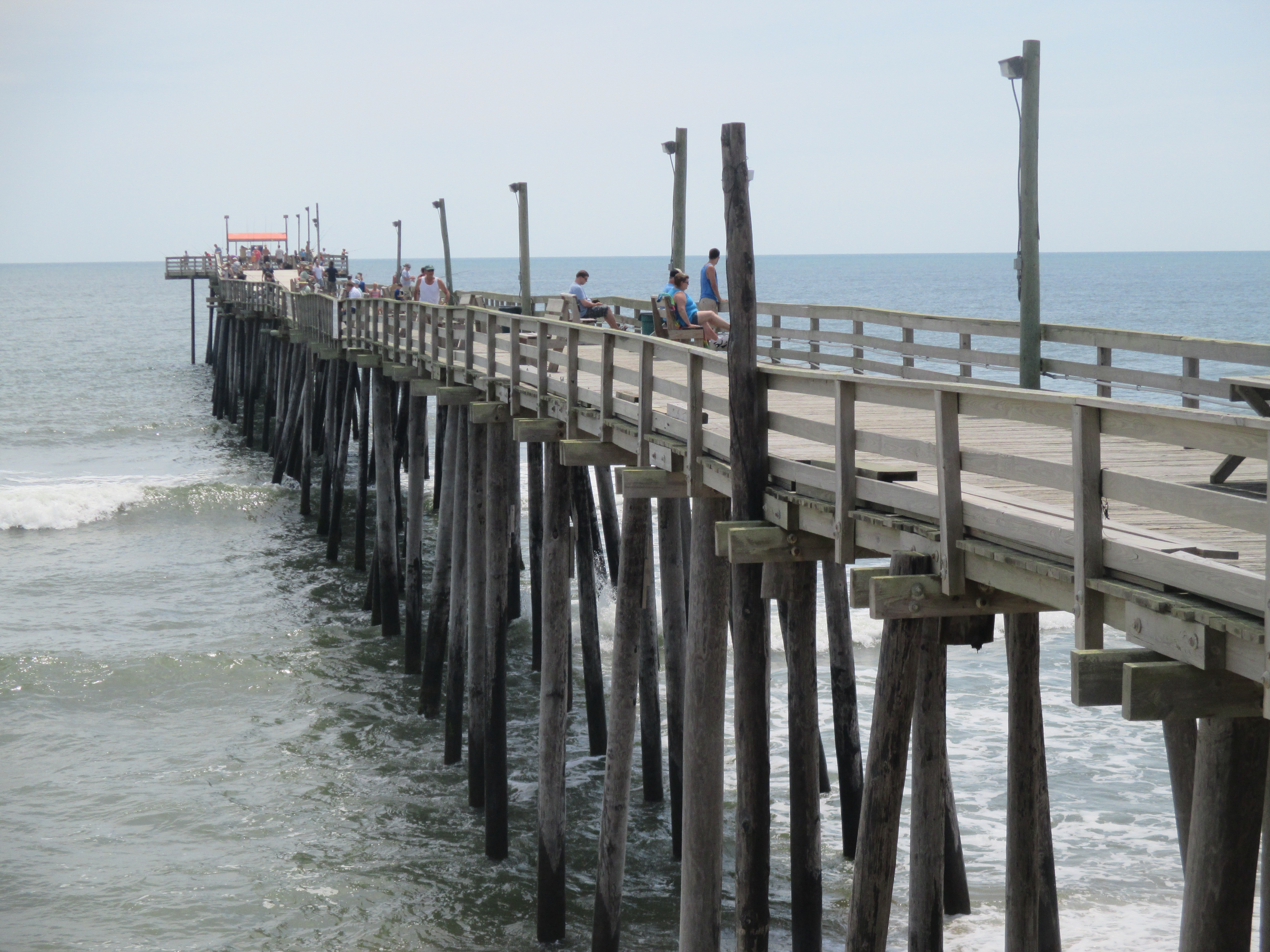
Fishing on the Outer Banks is one of the easiest and the most enjoyable activities you can do when on your vacation.  Many of our visitors travel hundreds of miles to enjoy this region.  And sometimes these visitors are unaware of what brings many others to our beaches every year.

Saltwater fishing is not only fun, relaxing but can be habit-forming for the entire family.

So how can you and your family begin enjoying this great past time? I would first recommend stopping by a local tackle shop. They can give the best overall advice on getting started. What species are being caught, the proper gear and bait and any other specific information you will need. They might even be able to offer you a complete fishing package at a reasonable price. Fishing licenses can also be purchased here.

The next thing I would do is head for a local ocean pier. All of our ocean piers have a tackle and bait shop. They are staffed with knowledgeable professionals who can give you “real time” advice.

Bring your own equipment and gear but find out that it won’t work for the current conditions or species? Pier staff can rent everything you need including rod reel outfits, rigging and fresh bait..

For novice anglers, fishing on an ocean pier is usually the best way to start. They can help you select the right gear for the species being caught. North Carolina requires a fishing license and if you fish on an ocean pier, the admission price includes a one-day or multiple day license. And the best part is that other anglers on the piers are more than willing to lend a hand to both new and experienced anglers.

All of the piers on the Outer Banks are family friendly.

In addition to fishing gear, each pier provides sheltered areas, snack shop, amusements and restroom facilities and more. All piers are designed to accommodate physically challenged anglers.

So if you are looking for something new and exciting during your visit to the Outer Banks then fishing might just do the trick.

Forever be warned though – saltwater fishing can be habit forming.

Until next time – Tightlines – Capt. Tony

Try Something New

Live bait always trumps fresh (dead) or artificial baits.  One technique that has been used frequently in other areas where fresh live bait is not available is the Hook, Line and Threader system.

The Hook, Line and Threader system is a technique where anglers actually use a live fish or a variety of crustacean species with a hook already embedded in them to catch fish.

This technique involves placing a hook into a live species body without harming it. And has been used by many anglers around the country with mixed success.

The system uses a stainless steel threader or needle, notched on one end,  inserted in the mouth of the live bait fish and pushed completely through the organ cavity and out through the anal opening. Then a leader, looped of one end and attached to either with a double or treble hook, is then connected to the notched end of the needle and is slowly and very carefully pulled back out of the mouth of the fish. In essence, using the organ cavity as a path from anal opening to the species mouth.

Once loop end of leader is through the fish’s mouth, it is attached it to the main line on the fishing rod.

The threaded bait could then be fished by free lining in the current or with a split shot weight allowing it to sink.

If done carefully, the placing of the looped leader and hook assembly does little to no harm to the fish. And most of the time, the fish or crustacean will survive in the water for quite a while.

The Hook, Line and Threader can be used on almost any species of bait fish and many different crustaceans. Insertion technique will vary so the angler should be creative.

Does it work in your region? That’s anybody’s guess. Could be one of many gadgets anglers purchase each year that hook more anglers then fish or could be that magic technique which can produce more action and results.

These devices are typically found in both brick and mortar stores and on the internet. Give it a try and let me know how you do. For more information go to: http://www.hooklineandthreader.com/


Until Next time – Tightlines – Capt. Tony