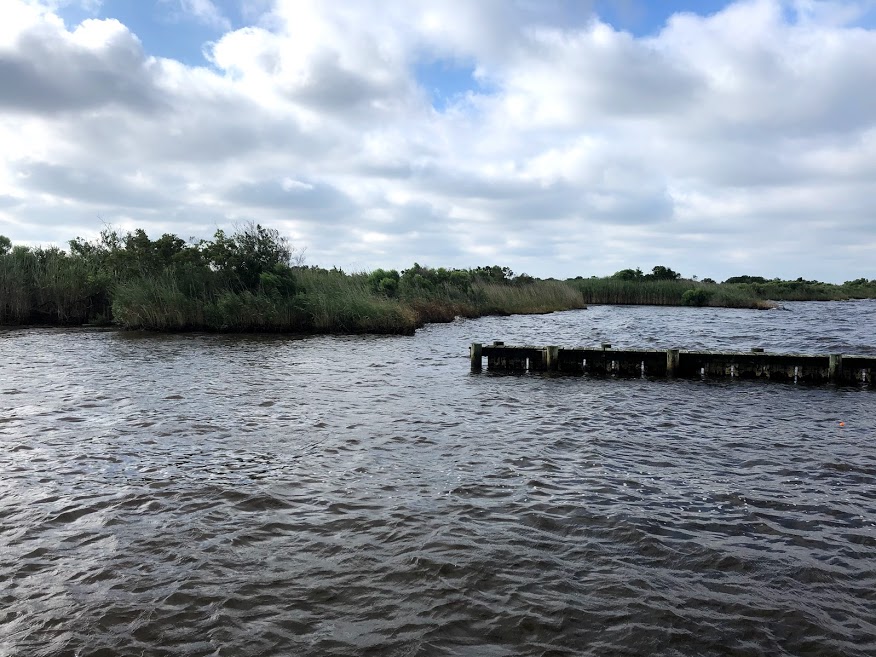
Knowing Tides Does Matter

Tides have a major influence on whether you catch fish or not. It’s the tides that help create the ideal conditions for fish to feed. And if the angler is present during these times, their chances of catching something improve dramatically.

As a rule, most anglers prefer to fish on the high or low tides. And frequently, anglers will also monitor sun and moon phases, but it’s the tides that brings them out.  It’s the specific part of these tides that make all the difference.

Let’s take a closer look at why you too should consider following the tides.

Ocean tides occur up to four times per twenty-four hour period – two high and two low. The tide phases are influenced by a number of conditions but mostly by the moon.  Frequently, we hear that it’s best to fish on the exact full or new moon or on the top of the high or the bottom low tide because in theory that’s when the bite is on.This is only partially correct. Let’s take a closer look at how the tides affect the bite.

But first, a little background. When the high and low tide are at their peaks, the water is slack and not moving unless there is outside influence such as wind. And second, when the tide is between the high and low stage, a significant water movement can occur between the two tide phases.

Now, let’s break down one side of a tide. At the highest phase of high tide the water is slack. As the tide begins to fall, water starts to move toward the low tide phase. As the level continues to fall, this tide or water begins to pick up speed until it reaches a certain point, at which time the water begins to slow again to a slack phase.  Then the process starts again, but in reverse.

So let’s do an example to help find the best time to fish. Let’s start with an example of high tide at 6:00 am  low tide at 12:00 noon. The tide is slack at 6:00 and with gravitational influence the water level or tide begins to fall. As the tide continues to fall, it will pick up speed typically at around 7:30 and continue to increase flow or speed until 10:30. At this point the tide begins to lose its force and between 10:30 and 12:00 noon, the tide slows and finally is slack again.

As you can see in this example, the fastest moving water and the best time to fish is approximately 1-1/2 hours after high tide. Other times work too, but for increased success, focus on the ebb tide, especially around inlets and sloughs.

Remember, there are many other conditions that can influence the bite. Water movement is just one. Monitoring water temperature, seasonal migration and barometer can also improve your success.

But reviewing the tide phase should always be part of your fishing trip preparation.

So the next time you pick up a local tide chart – do some homework and you might just catch some more fish.

Until next time – Tight lines – Capt. Tony
Fish the Structure

Warm weather fishing can be tough. And anglers can always use a little help especially in summer. So let’s talk about structure again.

What does having structure have to do with being successful?  Plenty!!

An angler can significantly improve their catch rate if they are able to recognize the presence of structure and how to use it to their advantage. This knowledge along with several other scouting skill sets can give both the novice and experienced angler that competitive edge.

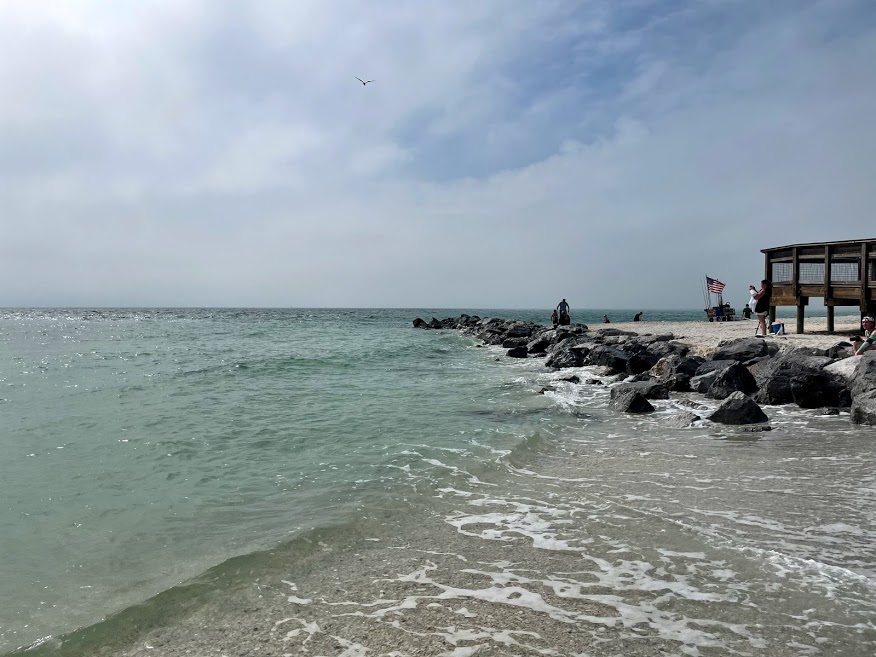
Rocks near the Shore

Structure can be defined as anything having an unusual characteristic found either horizontally under water or standing vertically in the water column. Many structures are created by nature or installed to either support another structure or another purpose. Regardless of the types of structures, they can also be found at various locations and water depths.  Either way, structure is beneficial for both anglers and many saltwater species

Vertical structure could be pilings, bulkheads, tree stumps, root systems or jetties that extend above the surface. Horizontal structures are submerged and may include depressions, holes, drop-offs, ledges, rocks, tree roots or sunken logs. The most common horizontal structure are small holes or depressions and the change where sand bottom meets a grass flat.

Structure provides safety and food source for many species. The fish’s ability to move around this formation provides their ability to avoid another predator. Also, many small bait fish and crustaceans remain close to structure adding to the larger species food source.

When fishing a vertical structure, the angler should focus on the leeward side. Fish typically remain in the calm leeward side waiting for a bait fish or other species to pass by.  When fishing a horizontal structure such as a depression or grass flat, let your bait pass as close as possible, changing speeds and action of the retrieve.

When fishing structures, anglers should mimic the action of a bait fish or crustacean. They must provide a natural retrieve. Bait or lure presentation here is extremely important as not to spook or chase the fish out of that zone. The bait or lure should be retrieved slowly both in the current and static areas. Then repeated.

Proficient anglers have the ability to use various retrieval or twitching actions that cause the fish to either sense anger, fear or instill their interest to increase to attack.  But it is imperative that the action must be natural and lifelike.

Some structures are easily located but others are not.  Vertical structures are obvious – they stick out f the water. But horizontally must be discovered. One way to locate a bottom structure is to take either a bank sinker or a lead jig head with the hook removed attached to a break-away light test leader and cast out in various locations. Feel and resistance during the retrieve can reveal uneven bottoms and structure created components.

Ability to recognize and use structure is the easiest way for an anglers to improve their catch rate.

And although it’s an important part of finding fish, its only one tool in the angler’s catch box. The ability to recognize structure and use it to catch fish can be a game changer.

Until Next Time – Tightlines – Capt. Tony

Who Does Structure

What does having structure have to do with being successful?  Plenty!!

An angler can significantly improve their catch rate if they are able to recognize the presence of structure and how to use it to their advantage. This knowledge along with several other scouting skill sets can give both the novice and experienced angler that competitive edge.

Structure can be defined as anything having an unusual characteristic found either horizontally under water or standing vertically in the water column. Many structures are created by nature or installed to either support another structure or another purpose. Regardless of the types of structures, they can also be found at various locations and water depths.  Either way, structure is beneficial for both anglers and many saltwater species

Vertical structure could be pilings, bulkheads, tree stumps, root systems or jetties that extend above the surface. Horizontal structures are submerged and may include depressions, holes, drop-offs, ledges, rocks, tree roots or sunken logs. The most common horizontal structure are small holes or depressions and the change where sand bottom meets a grass flat.

Structure provides safety and food source for many species. The fish’s ability to move around this formation provides their ability to avoid another predator. Also, many small bait fish and crustaceans remain close to structure adding to the larger species food source.

When fishing a vertical structure, the angler should focus on the leeward side. Fish typically remain in the calm leeward side waiting for a bait fish or other species pass by.  When fishing a horizontal structure such as a depression or grass flat, let your bait pass as close as possible, changing speeds and action of the retrieve.

When fishing structures, anglers should mimic the action of a bait fish or crustacean. They must provide a natural retrieve. Bait or lure presentation here is extremely important as not to spook or chase the fish out of that zone. The bait or lure should be retrieved slowly both in the current and static areas. Then repeated.

Proficient anglers have the ability to use various retrieval or twitching actions that cause the fish to either sense anger, fear or instill their interest to increase to attack.  But it is imperative that the action must be natural and lifelike.

Some structure is easily located but others are not.  Vertical structures are obvious – they stick out f the water. But horizontal must be discovered. One way to locate a bottom structures is to take either a bank sinker or a lead jig head with the hook removed attached to a break-away light test leader and cast out in various locations. Feel and resistance during the retrieve can reveal uneven bottoms and structure created components.

Ability to recognize and use structure is the easiest way for an anglers to improve their catch rate.

And although it’s an important part of finding fish, its only one tool in the angler’s catch box. The ability to recognize structure and use it to catch fish can be a game changer.

Until Next Time – Tightlines – Capt. Tony